Project Title: HempStream One
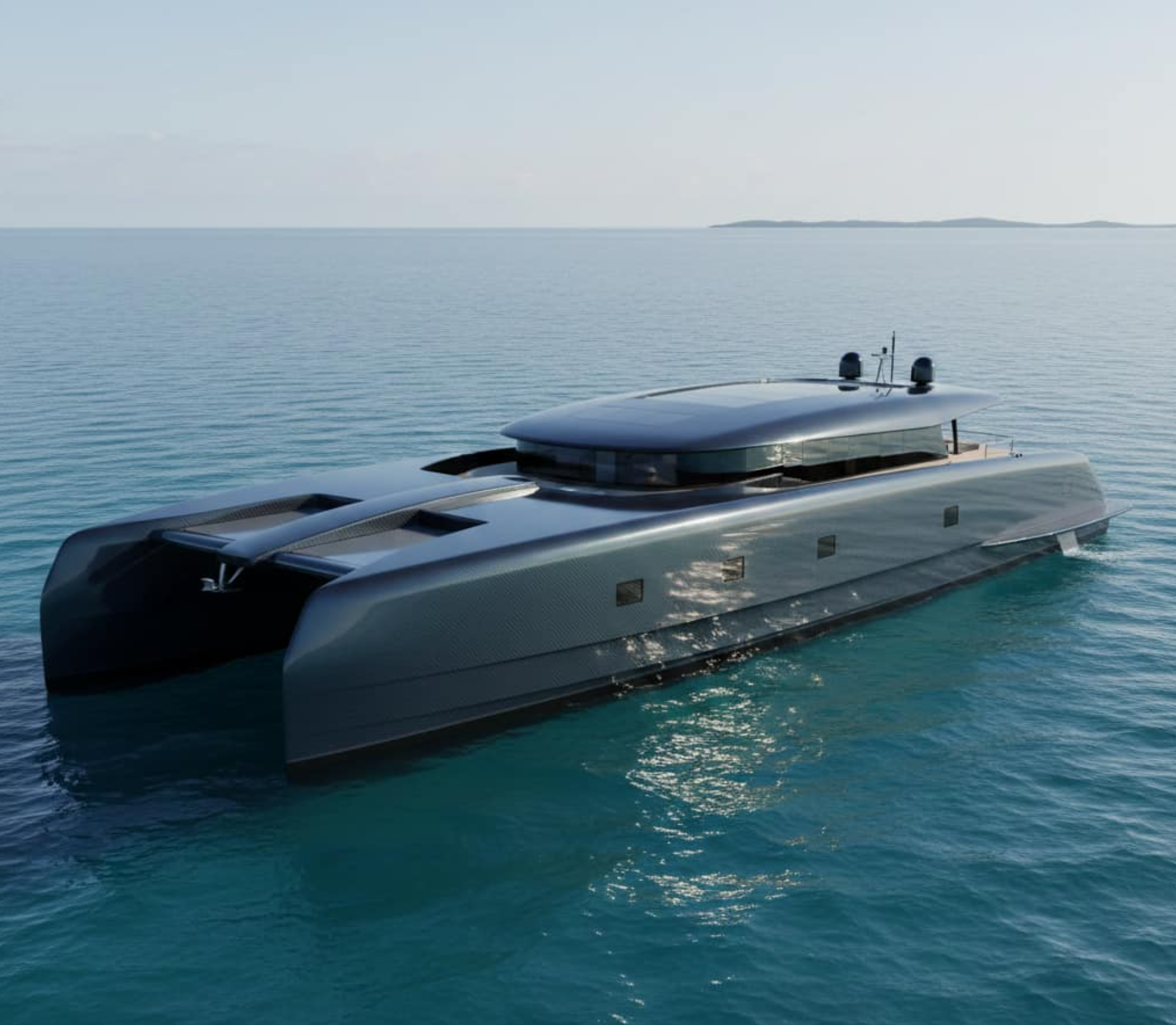
Vision: To merge ancient botanical strength with aerospace-grade hydrofoil technology, creating the world’s most sustainable luxury performance yacht.
1. Executive Summary
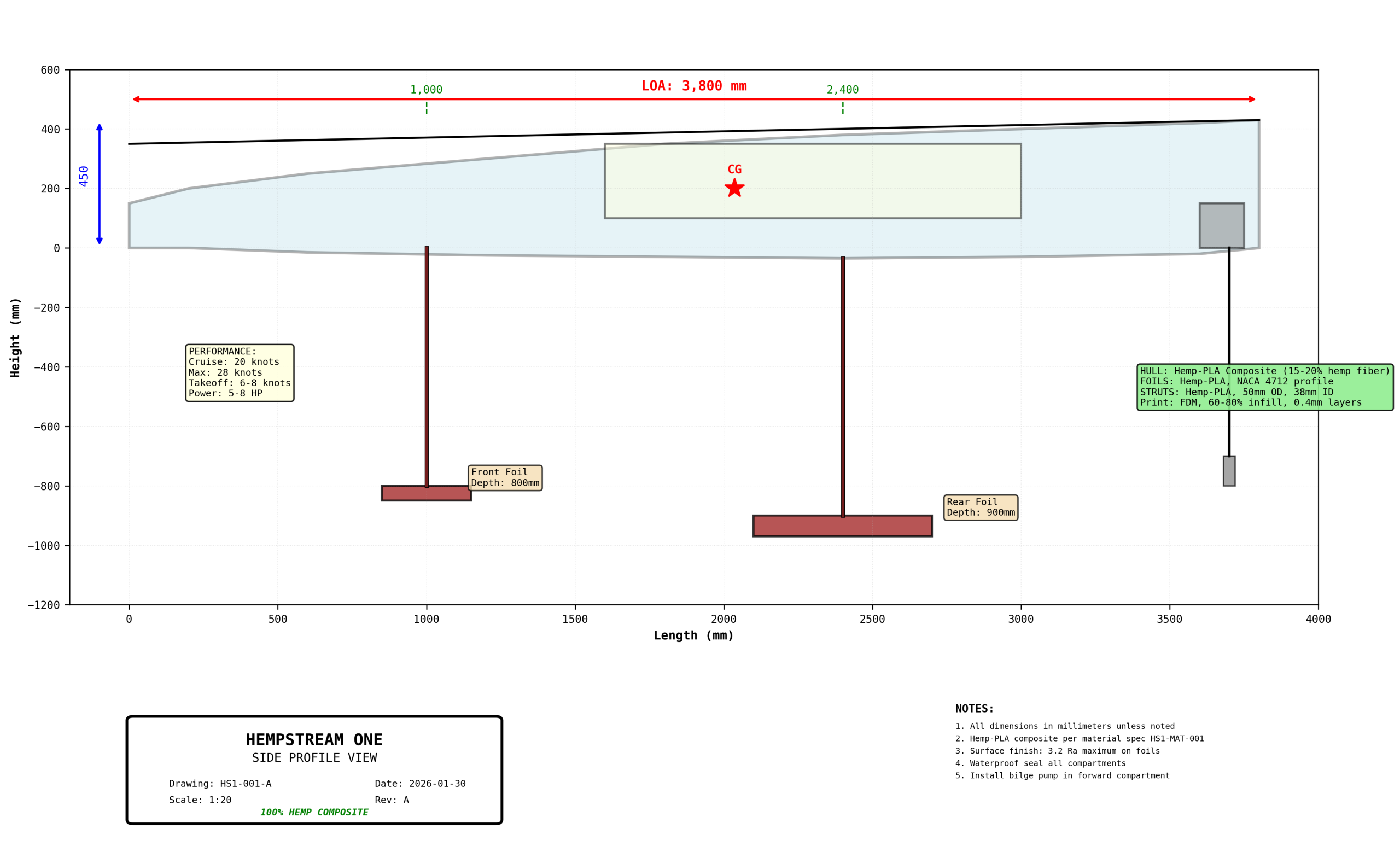
The HempStream One project aims to disrupt the luxury yachting industry by replacing traditional carbon fiber and fiberglass with a carbon-sequestering, hemp-based composite. By utilizing Large Format Additive Manufacturing (LFAM), we eliminate traditional mold-making waste and create a structurally optimized, monolithic hull integrated with automated hydrofoil systems for high-speed, low-drag efficiency.
2. Strategic Objectives
Structural Innovation: Print a continuous hull up to 12 meters in length using a proprietary hemp-bio-resin filament.
Performance Engineering: Integrate active hydrofoil technology to reduce drag by 40% and increase range by 30%.
Sustainability Benchmark: Achieve a 70% reduction in the production carbon footprint compared to traditional yacht manufacturing.
Market Leadership: Establish the Hennepnatie as the premier technical consultant for bio-based maritime engineering.
3. Phase-Based Development Plan
Phase I: Research & Material Science (Months 1–4)
Filament Development: R&D of a high-tenacity hemp-fiber reinforced polymer (HFRP). Focus on UV resistance, salt-water hydrophobicity, and tensile strength.
Structural Simulation: FEA (Finite Element Analysis) to test the “monocoque” 3D-printed structure against maritime stress loads and wave impacts.
Legal & Certification: Engagement with maritime authorities (e.g., CE marking, Lloyds Register) for bio-composite hull certification.
Phase II: Design & Prototyping (Months 5–8)
Hydrodynamic Design: CFD (Computational Fluid Dynamics) modeling of the catamaran hulls and foil flight-control systems.
Micro-Scale Printing: Printing of 1:10 scale models to test layer adhesion and structural integrity of the complex curves.
Foil Integration: Engineering the retraction mechanism for the hydrofoils within the printed internal cavities of the hull.
Phase III: Large Scale Production (Months 9–14)
LFAM Implementation: Utilizing a gantry-style 3D printer capable of printing the full beam and length of the catamaran.
The “One-Piece” Print: A continuous 24/7 printing cycle to ensure thermal bonding between layers, eliminating weak points found in traditional joints.
Post-Processing: Bio-resin coating and robotic sanding to achieve a high-end luxury finish.
Phase IV: Systems Integration & Launch (Months 15–18)
Propulsion: Installation of silent electric motors (EP) powered by high-density batteries.
Interior Fit-out: Utilizing hemp-wood and hemp-textiles for the luxury cabin to maintain a 100% bio-based interior.
Sea Trials: Testing hydrofoil lift-off speeds, stability in varied sea states, and hull resonance.
4. Technical Specifications (Target)
FeatureSpecificationHull MaterialHemp-Cellulose Reinforced Bio-PolymerManufacturingMonolithic LFAM (3D Print)Foil SystemT-Style Active Flight ControlLength Overall12.5 MetersCruising Speed22 Knots (on foils)Eco-ImpactFully Recyclable Hull at end-of-life
5. Risk Management
Material Degradation: Mitigated by high-performance bio-resins and specialized UV-topcoats.
Print Delamination: Addressed through controlled heated-chamber printing and continuous monitoring of extrusion temperature.
Regulatory Hurdles: Proactive collaboration with maritime safety bureaus to set new standards for 3D-printed bio-vessels.
6. Budget & Investment
The project will be funded through a combination of:
Hennepnatie Coop Shares: Direct community investment.
Sustainability Grants: EU Green Deal and Innovation funds for circular economy projects.
Early-Adopter Pre-orders: High-net-worth individuals seeking sustainable luxury.